Pages

Showing posts with label Wong Jasmine. Show all posts
Friday, January 22, 2016

Egg Lasagna with Monkfish and Clams

For my last post, I waned to do something a bit more challenging. So, I decided to make lasagna. Making this dish has always seemed like an intricate process to me but I was ready to test my cooking skills.


Ingredients:
  • 8 sheets Barilla oven-ready egg lasagna
For the Sauce-
  • 0.25 cup extra-virgin olive oil
  • 12 oz. Monkfish
  • 11 oz. Clams
  • 1 sprig parsley, chopped
  • 0.5 cup white wine
  • 12 jumbo shrimp
  • 4 oz. Cherry tomatoes
  • Salt and black pepper to taste
For the roux-
  • 2.5 tbsp. Unsalted butter
  • 0.25 cup all-purpose flour
  • 2 cups fish stock
  • salt to taste
(I Love Pasta 281)


The very first thing I had to do was preheat the oven to 350 degrees Fahrenheit. After doing this, I rinsed and scrubbed the clams. I put the clams, olive oil and white wine into the pan and cooked the clams until all of them opened. After all the clams opened up, I took all of the clams out of the shells and saved the liquids, which will be used in the roux later (I Love Pasta 281).
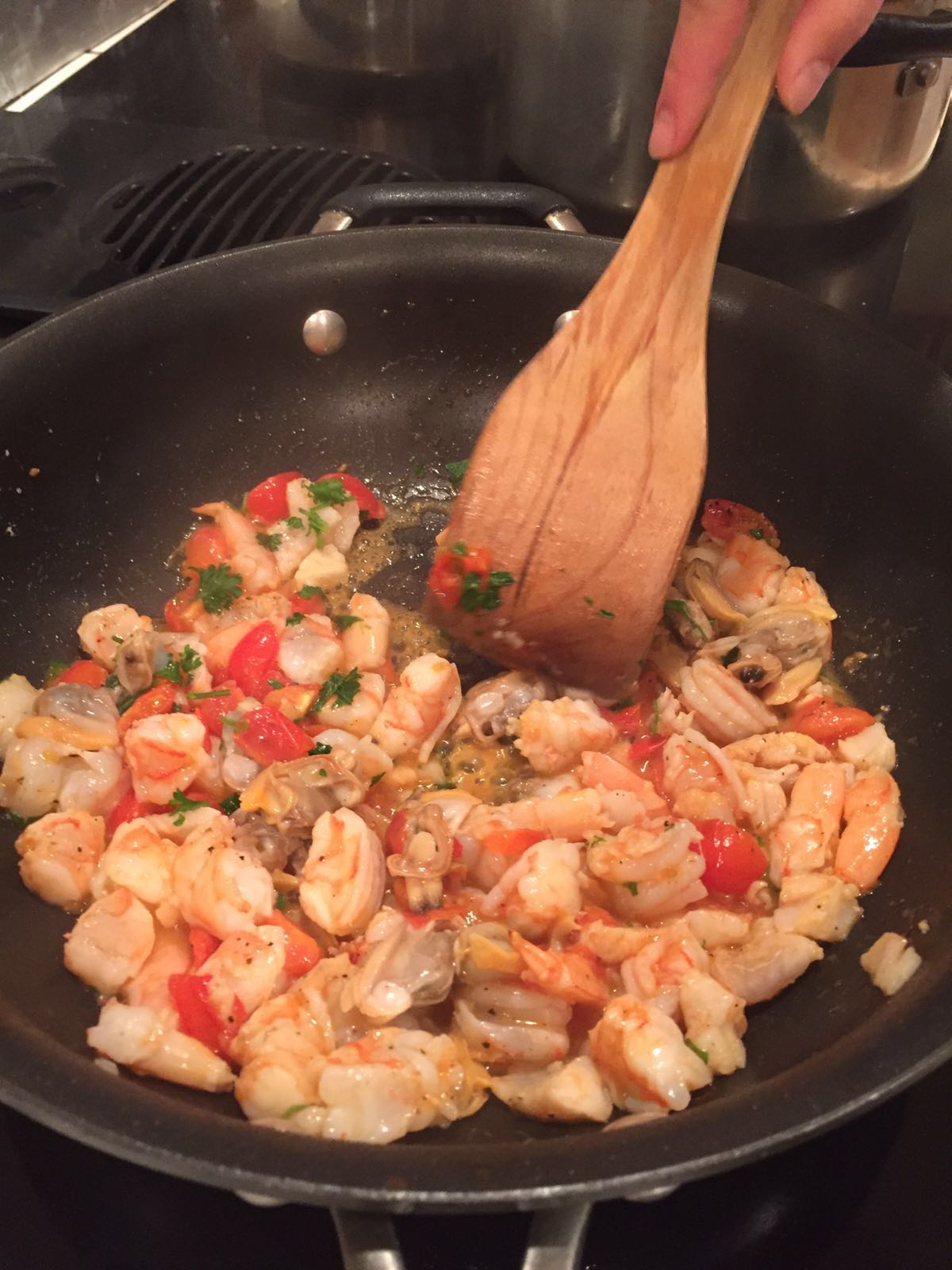
The next thing I did was cut the tomatoes into quarters; cut the shrimp; and filleted the fish. I put all these ingredients into a pan and sautéed them until the seafood was cooked thoroughly. Next, I added the clams and parsley to the mixture and, after this, I set this sauce aside.


The last thing I had to prepare was the roux. If you don't know what roux is, it is something used to thicken the sauce. For me, this was the hardest part since I didn't know exactly what roux should look and taste like. Although I didn't know, I continued to follow the instructions in the book. The book instructed me to, "Add the flour to the butter and whisk until smooth and free of lumps" (I Love Pasta 281). This was a good tip since adding the fish stock, first, would've made the roux extremely lumpy. Finally, all I had to do was put the roux in the buttered pan and layer on lasagna with the two sauces. After doing this, I baked the lasagna for approximately 25 minutes.
When I took out the lasagna, the first thing I noticed was how dry the lasagna looked. I knew something was off, but I couldn't bring myself to think that I had messed up; I decided to eat it and I realized that the I hadn't put enough sauce on the lasagna. The sauce should've made the lasagna more moist and pasta-like, but I didn't put enough sauce on the edges so the outside was crispy like chips.
Overall, the taste was fine okay I was disappointed that I messed up on the most important part, the lasagna. Although the pasta didn't turn out like I had planned, I enjoyed the process because I was able to learn from all the mistakes I made. If I had to rate this dish out of 5, I would say it was a 3. Even though I failed this time, I will definitely try to make lasagna again some time in the future.


Do you think that making a mistake is the best way to learn?


I Love Pasta: An Italian Love Story in 100 Recipes. Newtown: Taunton, 2013. Print.
Monday, January 18, 2016

Casarecce with Genoa-style Pesto

Today, I wanted to try something that we always eat in our home, a pesto pasta dish. For me, it's my favorite since it's not too filling or sour which makes it perfect. Also, I wanted to try something different since this dish required me to actually make a sauce.


Ingredients:
  • 17 oz. Casarecce
  • 1 oz. basil leaves
  • 0.5 cup plus 2 tbsp. grated parmesan cheese
  • 1/3 cup plus 1.5 tbsp. asiago cheese
  • 0.75 cup plus 2 tbsp. extra-virgin olive oil
  • 3.5 oz. green beans, chopped
  • 7 oz. potatoes, peeled and diced
  • 1 clove garlic
  • salt
(I Love Pasta 184)


To start off, I first boiled the pasta for eleven minutes. Then, I drained it and let is sit in the colander while I started to make the sauce. For the sauce, I first had to dry and wash the basil leaves. After this, I grated the two different cheeses until I had the right amount. To actually make the sauce "[I had to] use a blender of roof processor to pulse the basil with 2/3 cup of olive oil, a pinch of salt, and the garlic until well combined" (I Love Pasta 184). Pulsing was a great idea since it made it easier to mix all the ingredients thoroughly and it made sure that all the ingredients were chopped up.


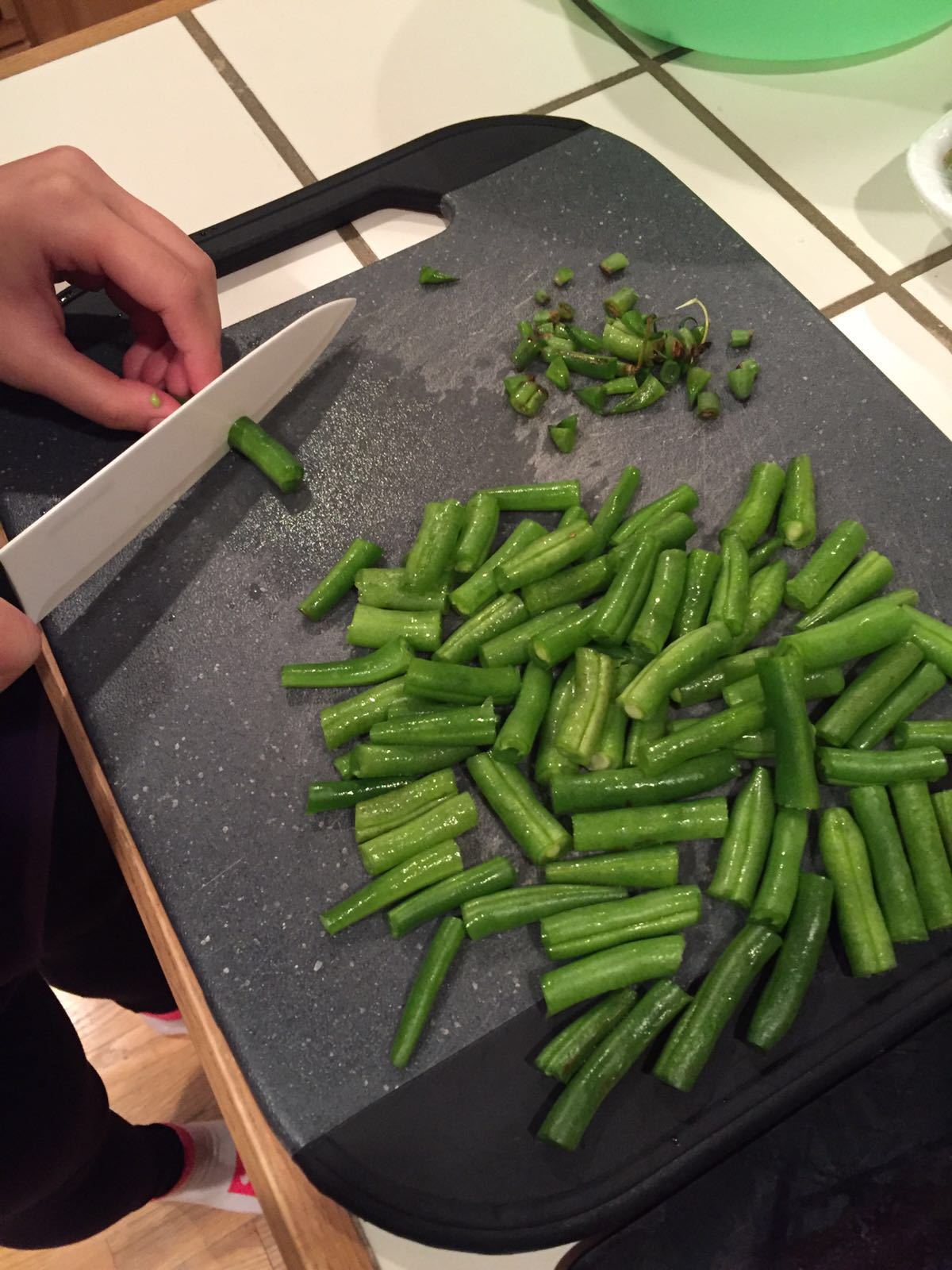
For this last part, I cut the beans so they were about an inch long and diced the potatoes. Then I boiled the beans and potatoes for eleven minutes in salted water.


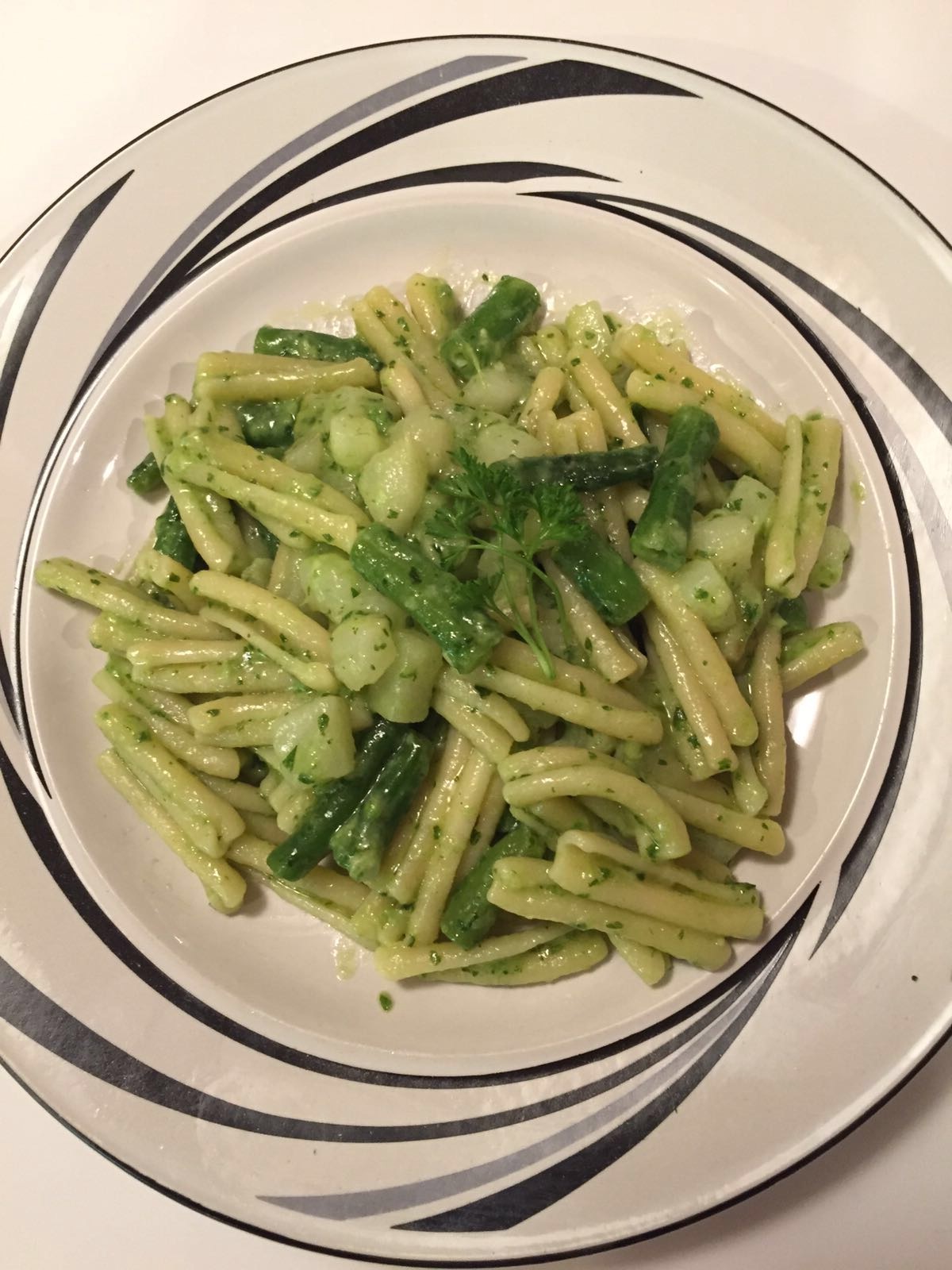
The very last step was to add the pasta and pesto sauce into the pan with the beans and potatoes. A tip in the book was to leave some of the water, from the potatoes and beans, in the pan to dilute the pesto sauce (I Love Pasta 184). This was good advice because it made the  sauce less thick. I, then, tossed all the ingredients together so all the sauce was evenly divided.


Out of all the dishes I have made so far, I liked this one the best. This time, there was enough sauce so the pasta wasn't dry and I finally had the right portions of ingredients. I also love pesto sauce, so it was interesting to see how it's all made and I will definitely start making my own sauce instead of buying it. Also, everyone agreed that this was closest in taste to what my mom usually makes so  I would give this dish a four out of five star rating.


Have you ever tried to replicate a dish that you loved? Did you succeed?


I Love Pasta: An Italian Love Story in 100 Recipes. Newtown: Taunton, 2013. Print.
Thursday, December 31, 2015

Neapolitan ziti au gratin with toamtoes and breadcrumbs

For the past two dishes I've made, both only used the stove so I decided to further my knowledge in cooking. Today, I chose a recipe that needed an oven to be completed since I've never used it in cooking. Before today, I didn't think the oven was commonly used in cooking but I learned that it is actually used quite frequently.


Ingredients:
  • 12 oz. Neapolitan Ziti
  • 1.75 oz. Onion, peeled and diced
  • 1.75 oz. Carrot diced
  • 0.75 cup Extra-virgin olive oil
  • 1 lb. Tomatoes, peeled and chopped
  • 1 oz. dried breadcrumbs
  • 1 clove garlic, peeled and crushed
  • Salt and pepper to taste
(I Love Pasta 82)


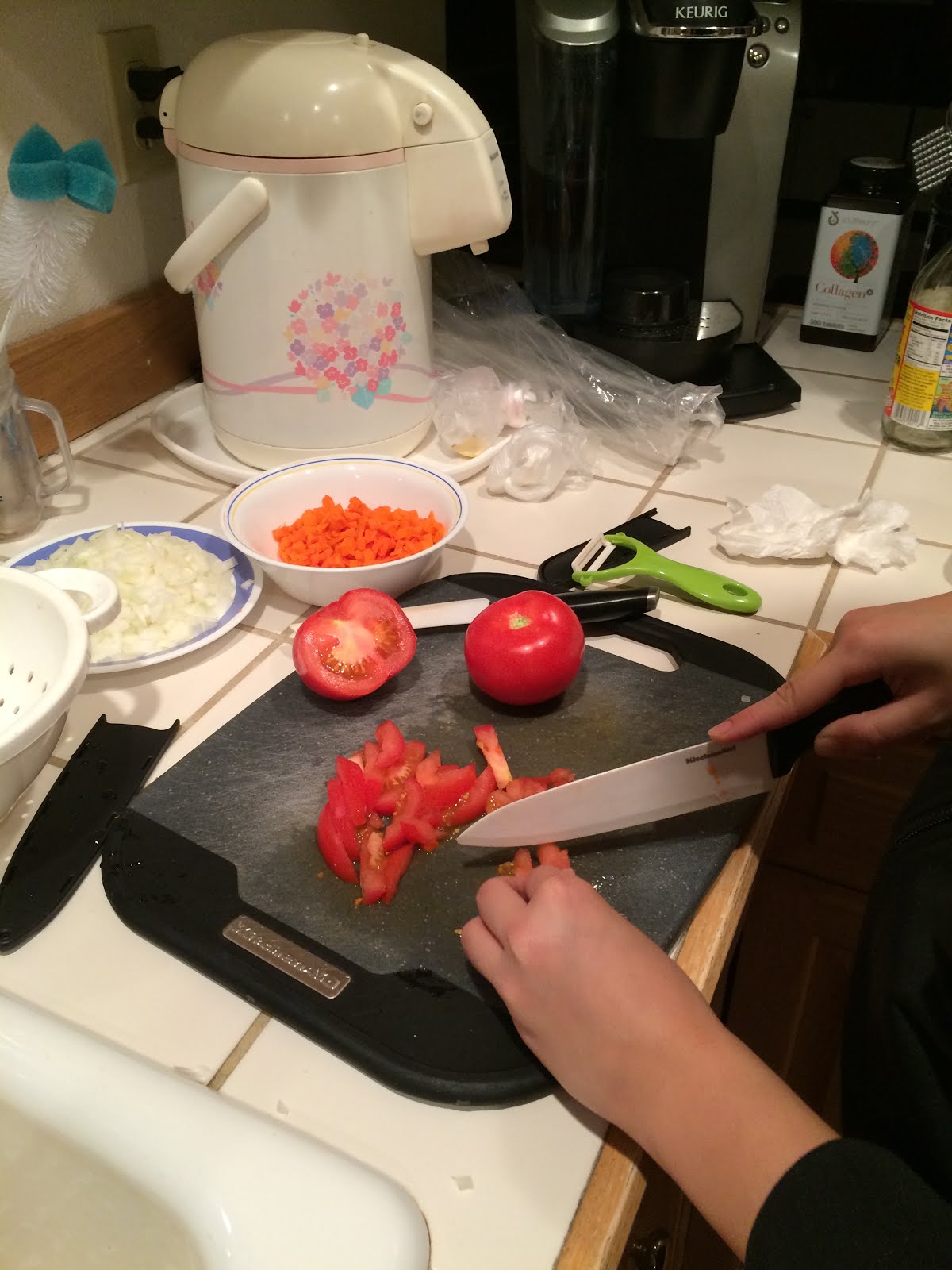
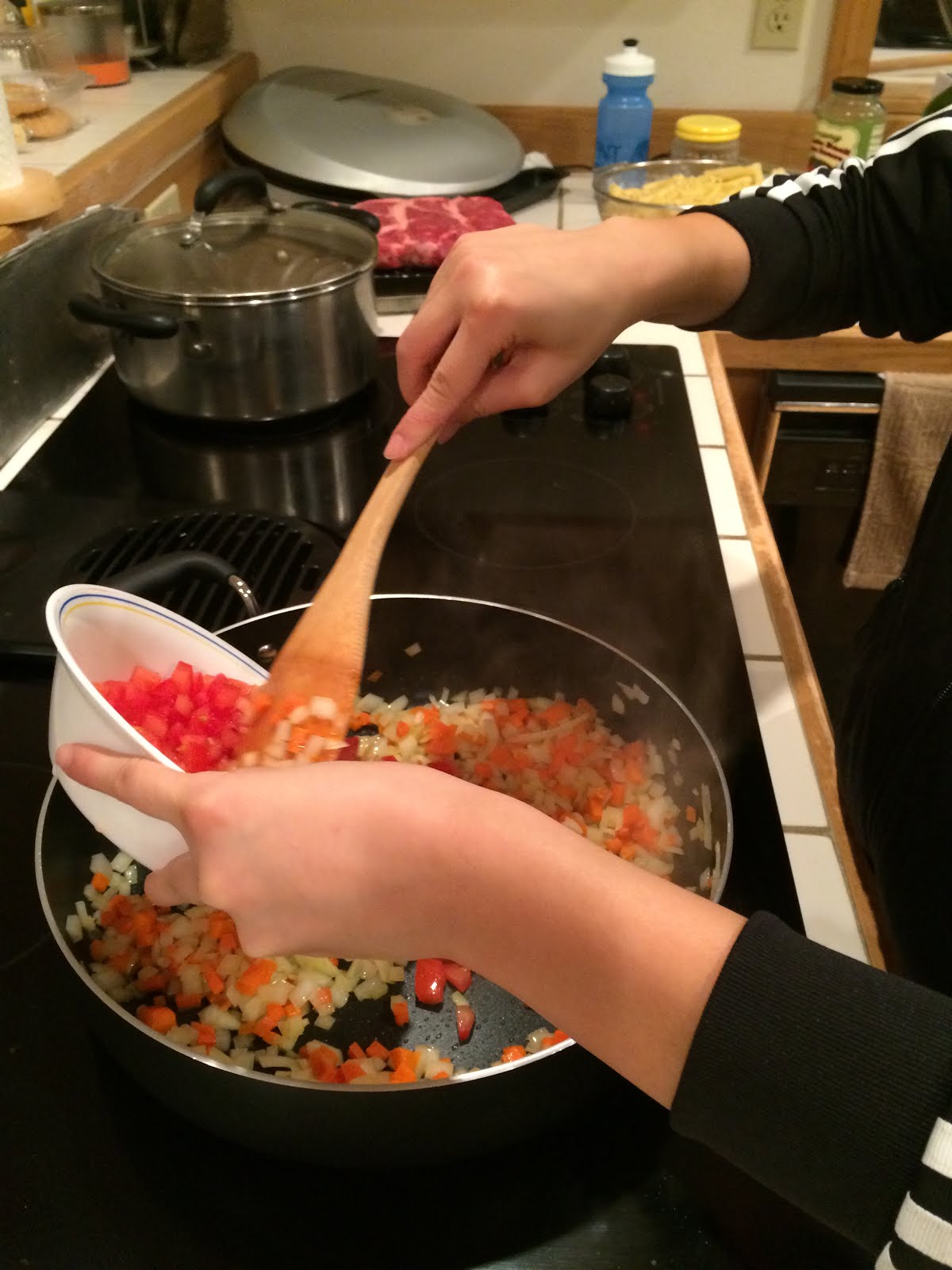
The very first thing I did was preheat the oven to 390 degrees Fahrenheit. Then, I toasted some bread and blended the toast in my Magic Bullet. After doing this, I chopped up the onions, carrots, and tomatoes that would be used to make the sauce (I Love Pasta 82).

Next, the book said to "Heat two-thirds of the oil in a pan over medium and brown onion, carrot, and garlic" (I Love Pasta 82). After I had browned them, I added the tomatoes and cooked it over high heat for ten minutes. During this time I also seasoned the sauce with salt and pepper.
Then, I boiled the water and cooked the ziti for ten minutes. After making the ziti, I added the it to the sauce and mixed the two together. Finally, I put the pasta into a casserole dish and sprinkled the breadcrumbs on top. I also put some oil in the pasta and baked it in the oven for six minutes.


Making this dish taught me that little things can really change a dish. Before sprinkling the breadcrumbs, the dish looked very sad and it didn't taste very good. After putting the breadcrumbs, there was more taste and it transformed its texture a lot.


I would say this dish deserves a two out of three. This dish was quite bland and that was this dish's major downside. In the end, we added some pasta sauce to the pasta to give it more taste and it instantly tasted a thousand times better.


When you eat something that tastes bad, what do you do to make it better?


I Love Pasta: An Italian Love Story in 100 Recipes. Newtown: Taunton, 2013. Print.


Sunday, December 27, 2015

Farfalle with brie cheese and mushrooms

Today I decided to make a dish that is uncommon in our house. We usually don't put mushrooms in our food because some people don't like them. It's always really hard to accommodate to everyone since we always have guests staying here, so I decided not to. I love mushrooms so I decided I would make this dish even if some people refused to eat it.

Ingredients:
  • 12 oz. Farfalle
  • 14 oz. Crimini mushrooms
  • 4.5 oz. Brie cheese
  • 1/3 cup Milk
  • 2 tbsp. Extra virgin olive oil
  • 3/4 oz. Parsley
  • 1 tbsp. Dry white wine
  • 1 Clove garlic
  • Salt and pepper
(I Love Pasta 112)


The first thing I did was make the sauce. For this, I would need the brie cheese and milk. In the book it said, "Add the brie and stir until cheese is melted and a smooth fondue is obtained" (I Love Pasta 112). This was very helpful since it described exactly what the sauce should be like.


Then, I cleaned and cut all the mushrooms into quarters. After this, I sautéed the garlic and parsley with the mushrooms for five minutes (I Love Pasta 112). I then added the white wine and seasoned the mushrooms with pepper.
Finally, I boiled the farfalle in the salted boiling water for ten minutes. After draining the farfalle, I added the cheese sauce to the mushrooms and mixed it together for about two minutes. Lastly, I combined the sauce with the pasta to make the final product.

If I had to rate this dish, I would give it three out five stars since nothing stood out to me about this dish. After tasting it myself, I let everyone else have a bite. They all agreed that this dish was something you would order at a restaurant and never order again. The only person who didn't try my dish was Jacqueline. She hates mushrooms for some absurd reason and refused to even try the farfalle. (How ridiculous!) Although she didn't eat it, I didn't care since there was more food for me to eat.


Do you have any foods that you hate? If there are, tell me what they are and why you hate them.


I Love Pasta: An Italian Love Story in 100 Recipes. Newtown: Taunton, 2013. Print.

Wednesday, November 25, 2015

Linguine with Sausage and Peppers

In my family, pasta is a staple in our diet just like rice. Whenever we're running late or  too lazy to cook a traditional Chinese meal, pasta is our go to meal. Although I love to eat, cooking was a mystery to me so I decided to tackle this issue and start learning. Today, I cooked dinner for my family and made a very quick and simple dish: Linguine with sausage and peppers.


Ingredients:
  • 9 oz. Linguine
  • 11 oz. sausage
  • 3.5 oz. red bell pepper, seeded and diced
  • 3.5 oz. yellow bell pepper, seeded and diced
  • 11 oz. tomatoes
  • 6.5 oz. onion, peeled and thinly sliced
  • 0.25 cup extra-virgin olive oil
  • Salt and pepper
(I Love Pasta 228)


Although I've never cooked before, it definitely was an easy process. The first thing I did was dice all the peppers, tomatoes, and onions. Also, I crushed up all the sausages for the sauce. Then, I sautéed the onion and peppers. In the book it said, "When it is well browned, discard the melted fat and transfer the sausage to the peppers" (I Love Pasta 228). This was a helpful tip as it made the sauce less greasy. Also, cooking the sausage separately really brought out its taste and made the sauce much more delicious.


After I made the sauce, the book said to boil the linguine until it was al dente and then to drain it (I Love Pasta 228).


Now that I had made the sauce and pasta, I combined them to come up with the final product.


The biggest issue I had was measuring out all the ingredients. When I went out to buy them, all the measurements used in the book were not used in the store. I ended up estimating all the measurements, but in the end there wasn't enough sauce for the pasta. Obviously I'm no Gordon Ramsay, so next time I'll definitely follow the cookbook precisely.

Once everyone had a bite, they all agreed it wasn't bad. This was a huge confidence booster since my mom usually makes great food so "not bad" was a big compliment for a first-time chef. Now that I've had a taste of my cooking, I'll definitely cook for myself more since I know it won't turn out too bad.


When you cook, do you think being precise is important?


I Love Pasta: An Italian Love Story in 100 Recipes. Newtown: Taunton, 2013. Print.