Pages

Showing posts with label Japanese Cuisine. Show all posts
Tuesday, January 31, 2017

Japanese Cuisine- Miso Soup

For this blog post, I made Miso Soup with Tofu and Mushroom. This soup wasn’t extremely challenging, but finding the ingredients was (mainly the Red and White). The recipe consists of Katsuo Dashi, White miso, Red miso, Mirin (rice wine that is similar to sake), silken tofu, and Shitake Mushroom. Katsuo Dashi is the standard stock for Japanese soups, made out of dried Bonito (atype of fish) and water (Dekura 144).


In order to make this soup, I first prepared the mushroom and tofu by cutting it up. Most of my tofu go smashed in the package so it was challenging to cut it. In addition, the mushroom was chopped a little smaller than I expected, since I thought it would expand more. After that, I squeezed two tablespoons of Red and White miso into a pot of water. When the miso dissolved, I threw in the mushroom, tofu, Mirin, and Katsuo Dashi. Finally, I “turned off the heat to allow each ingredient to simmer” (Dekura 45).


This is what the final product looks like; I’m impressed by how it tasted since I thought the Katsuo Dashi would taste funny considering how it was made out of dried up fish. What foods have you been surprised by after tasting the food?

Dekura, Hideo, and Danny Kildare. Contemporary Japanese Cuisine: Classic Recipes, Fresh Flavors. New York: Weatherhill, 2001. Print.

Japanese Cuisine- Nori Roll

Making sushi roll is one of the hardest food that I have made from this book. Many aspects of this food are challenging. From cutting all the ingredients to rolling the sushi together. Using Cucumbers are the easiest ingredient for sushi rolls (Dekura 93). Instead of using only cucumbers, I chose to challenge myself by using more ingredients. Since I have had a decent amount of culminating experience, I decided to improve my skills by giving myself a challenge. I took a recipe from my mom, which includes Cucumbers, Yellow radish, Crabmeat, Spam, fish sticks, rice, seaweed, and salad dressing. The main challenge of this recipe was cutting everything, but rolling it up was not as hard.

To start this Recipe I cut the Spam, Crabmeat, Yellow Radish, fish stick, and Cucumber into long strands. From my amount of experience, I could cut these ingredients without a struggle. However, from the amount I made, it took a long time. I cooked the rice while I was cutting the ingredients in order to save time. After the rice finished cooking, I “combined rice vinegar, sugar, salt” (Dekura 146). When I finished mixing the ingredients, I left the rice cooker open in order to cool off the rice.


When all the ingredients were finished, I took out my sushi mat (a bamboo mat) and laid it on the counter. According to Dekura, you should, “spread a handful of rice thinly over the nori without squashing it” (93). I used a water-vinegar solution to soak my hands, in order to avoid rice sticking on my hands. After getting all the ingredients onto the nori, I lifted the edge of the sushi mat and rolled up the sushi while pushing all the ingredients towards me (Dekura 93). Finally, when all the sushi is rolled up, I cut each piece by, “[cutting] it into halves, then fourths, then eighths” (Dekura 93).  


I'm extremely proud of my product, and I felt very accomplished after I finished doing everything. What foods have you been proud of making?


Dekura, Hideo, and Danny Kildare. Contemporary Japanese Cuisine: Classic Recipes, Fresh Flavors. New York: Weatherhill, 2001. Print.


Japanese Cuisine- Green Tea Tofu

         For my fifth post, I wanted to try something new; something that I’ve never tasted, nor have I ever heard about it. I want to expand my culminating experience by exploring new tastes, foods, techniques, and skills. Therefore, on this post, I created something called Green Tea Tofu. The name is self-explanatory as to what it is. I was intrigued by this dish because; I questioned how it would taste. Would it be bitter? Sweet? Salty? My curiosity drove me to create this dish myself.

               The dish consists ingredients such as silken tofu, Matcha Green Tea, agar agar powder, and Mirin. This dish isn’t time-consuming; It would take around 10-20 minutes or so. To start this dish, I place the silken tofu in a pot. Then I, “mash the tofu with a potato masher until it’s semi-liquid” (Dekura 77). When it becomes a thick paste, toss in 3 tablespoons of Green Tea powder. Again, continue mashing/mixing the solution until you have a consistent green paste. I messed up the next step, which was adding the agar agar powder. I forgot to mix it in water before adding it in the tofu and heating it up. After the mixture is heated up, strain the mixture through a sieve onto a rectangular mold (Dekura 77). Place the content into a refrigerator for roughly 30 minutes.

               As for the sauce, I used a combination of soy sauce, mirin, and Katsuo Dashi. Allowing the tofu to have a sweet, bitter, and salty taste. Additionally, some accompaniments you can use for this dish is ginger or pickled radish. Since I didn’t like either of those ingredients, I left them out of my dish. I added seaweed onto the tofu in order for it to look better.

               Finally, the dish tasted sweet yet salty (which I didn’t expect), and it seemed not stiff enough. I felt like I could’ve added more agar agar powder in order for it to harden up more. But all in all, I found this dish as a great learning experience, and I tried out a new dish.


So my question to you is: What dishes have you failed on making?

Dekura, Hideo, and Danny Kildare. Contemporary Japanese Cuisine: Classic Recipes, Fresh Flavors. New York: Weatherhill, 2001. Print.

Saturday, December 31, 2016

Japanese cuisine - Sushi

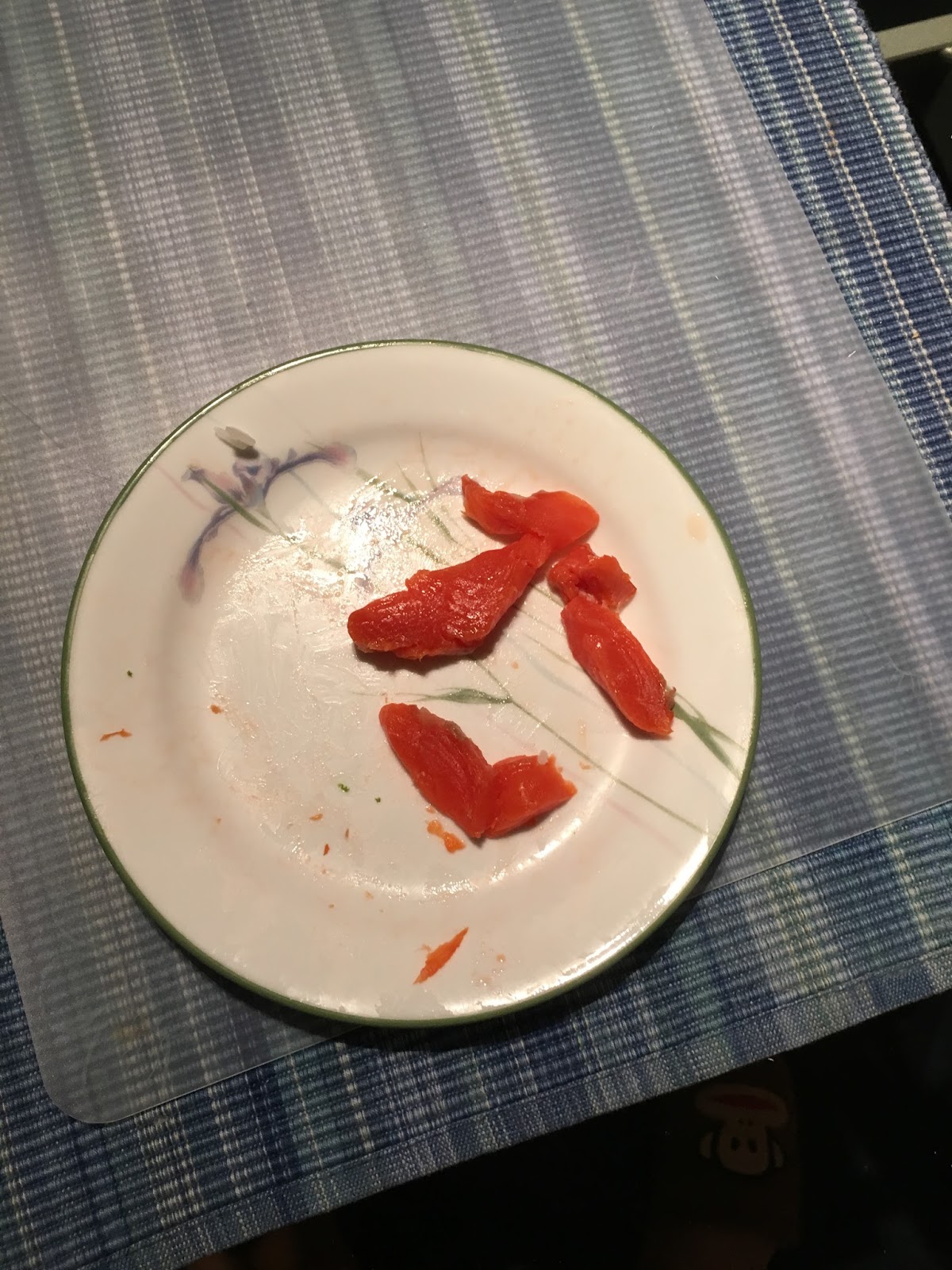
          Before I started making sushi for this project, I assumed that cutting up a piece of fish and placing it on a ball of rice would be simple. But as I finally got hands on experience with creating sushi, I was wrong. Many knife techniques are contributed into the making of sushi. The technique I chose to use was Sogi-Zukuri which is "a technique for thin sushi tops" (Dekura 149). Whereas the Hiki-Zukuri technique is used for thicker pieces of fish. In order to perform the Sogi-Zukuri technique you must slice the fillet at a 45-degree angle and slice approximately 1 cm (Dekura 149). My first couple slices didn't work quite as planned. The angle was slightly off causing my fish to be chunky and unappealing.


         After a couple more tries I finally acquired the skill of Sogi- Zukuri. I wouldn't consider my skill to be perfection because, I can consistently make good cuts, but I still mess up at times. Cutting the fish wasn't the only thing that was challenging. Creating the rice was also challenging. The correct way of creating a ball of rice is by "Combine water and vinegar in a bowl. Wash your hands well, dip your fingers into the bowl of vinegared water, then clap your hands together to remove any excess water" (Dekura 92). On my first attempt my hands were too wet, disallowing the rice to form into a ball and causes it collapse. On my second attempt i used less water on my hands but that made the rice stick to my hands. On my third try it seemed better but i still cant get the right amount of water on my hands to where the rice will form without sticking.
         Assembling the sushi was probably the easiest part of this process. I held the fish on my left hand and slightly cupped my hand. Then, I grasped the ball of rice with my right hand and rested it above the piece of fish. Using slight pressure I folded my fingers causing the fish and rice to stick (Dekura 92). All in all my experience with making sushi taught me a lot about cooking. I learned new knife techniques which can be used in other foods that I make in the future. 

How have you used a knife in your cooking?


Dekura, Hideo, and Danny Kildare. Contemporary Japanese Cuisine: Classic Recipes, Fresh Flavors. New York: Weatherhill, 2001. Print.
Wednesday, November 30, 2016

The World of Japanese Cooking: Shrimp Bowl Tempura

I always thought cooking was interesting because you can do multiple things with one ingredient. For example, shrimp. You can make crispy coconut shrimp, shrimp Alfredo, shrimp burgers, shrimp and grits, and a whole lot more. All the examples that i listed came from different cultural backgrounds. A cultural background that deals much with food is Japanese. The recipe i am going to teach you how to make is an easy recipe. TEMPURA. Tempura is basically a Japanese dish that could consist of fish, shellfish or vegetables that are battered then fried. I ate Japanese food from time to time, and i was never disappointed. With my blog, i hope you remake and try these wonderful Japanese cuisines.

The essentials of this recipe are:
cooked rice
shrimp
flour
egg
cold water
mirin
shoyu

The number one important part of making shrimp tempura bowl are the eggs. "You need one egg and cold water that makes 1 1/4 of a cup." (Sizuki, 158). If you forget this then the flour will not properly stick onto the water. After learning this I have mastered flour sticking on shrimp. Devein the shrimp and peel of the shell. Dip it in egg then flour. (Sizuki, 158). Make sure that you watch the shrimp cook since it cooks really fast. ENJOY.

Questions: Do you think this looks great for a first time japanese cook? What is your favorite cultural background to eat from